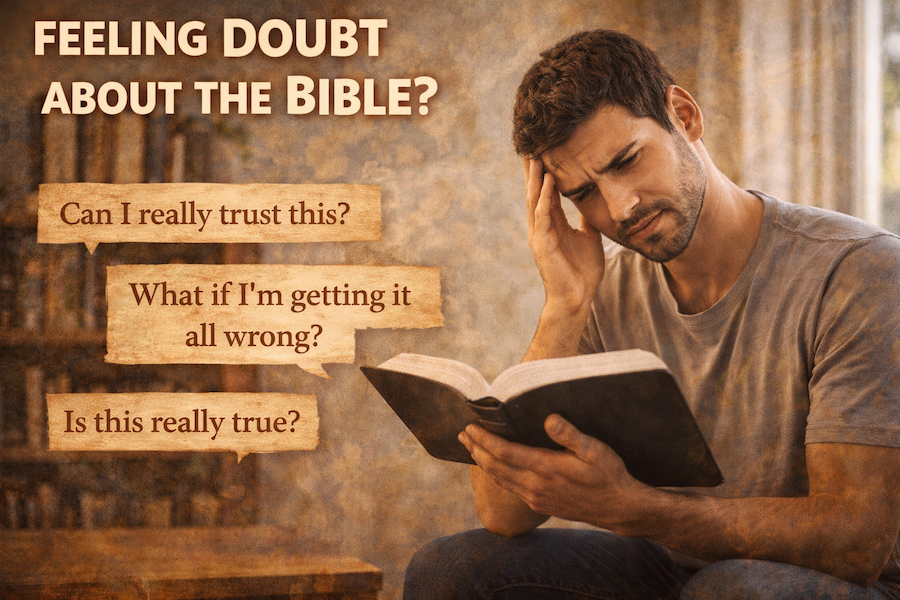
Faith is often tested not in moments of comfort, but in moments of questioning. Honest questions about God, suffering, truth, and purpose are not signs of weak faith, but opportunities to strengthen it. Scripture does not avoid difficult issues; it engages them, offering both truth and perspective.
One of the most common questions is: “If God is good, why is there so much suffering?” The Bible acknowledges the reality of pain in a fallen world. Suffering is not presented as meaningless, but as something God can use for a greater purpose. “And we know that all things work together for good to them that love God” (Romans 8:28). This does not minimize pain, but it reminds us that God is not absent in it.
Another difficult question is: “Is there really only one way to God?” Jesus’ words are clear: “I am the way, the truth, and the life: no man cometh unto the Father, but by me” (John 14:6). While this challenges modern ideas of relative truth, it also offers certainty. Christianity does not present many uncertain paths, but one clear and sufficient way through Christ.
Some ask, “Why should I trust the Bible?” The reliability of Scripture is supported by its consistency, historical grounding, and enduring message. More importantly, its truth is confirmed through experience and transformation. “Thy word is truth” (John 17:17). Those who engage with it sincerely often find that it speaks with authority and clarity beyond ordinary writing.
There is also the question: “What about people who have never heard?” While this is complex, Scripture emphasizes both God’s justice and His mercy. “Shall not the Judge of all the earth do right?” (Genesis 18:25). Christians trust that God is fair, even in situations we do not fully understand.
Another challenge comes in the form of doubt itself. Many wonder whether doubt disqualifies faith. In reality, doubt can lead to deeper understanding when it is addressed honestly. Even those closest to Jesus wrestled with uncertainty at times. The invitation is not to suppress questions, but to bring them to God.
Finally, some ask, “Does faith really make a difference in everyday life?” The answer is seen in transformed lives. Faith provides direction, purpose, and hope. It shapes decisions, strengthens character, and offers peace that circumstances cannot take away. “And the peace of God, which passeth all understanding, shall keep your hearts and minds through Christ Jesus” (Philippians 4:7).
Answering tough questions about faith is not about having every answer neatly packaged. It is about seeking truth with sincerity and responding with humility. Christianity does not claim that all mysteries are fully explained, but it does provide a foundation that is strong enough to hold even the hardest questions.
Faith grows not by avoiding difficulty, but by facing it with truth.

Leave a Reply