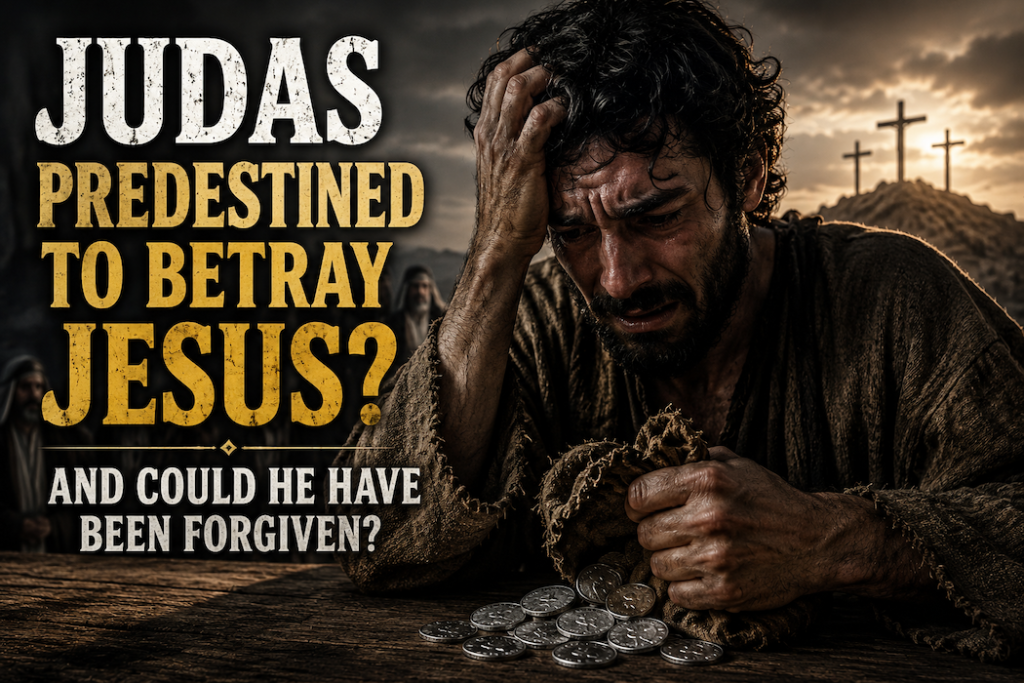
Few figures in the Bible provoke as many difficult questions as Judas Iscariot. Was he simply a greedy traitor, or was he carrying out a role that had already been written for him centuries before he was born? If his betrayal was part of God’s plan, why was he held accountable? And perhaps the most uncomfortable question of all: Could Judas have been forgiven? Christians have wrestled with these questions for nearly two thousand years.
Was Judas Foretold in the Old Testament?
In a sense, yes. The New Testament points to several Old Testament passages that appear to anticipate Judas’ betrayal long before Jesus was born.
“Even my close friend, someone I trusted, one who shared my bread, has turned against me.” Psalm 41 verse 9
Jesus Himself quoted this verse during the Last Supper, applying it directly to Judas.
“May their place be deserted…” Psalm 69 verse 25
“May another take his place of leadership.” Psalm 109 verse 8
Peter later applied both of these verses to Judas after his death.
“…they paid me thirty pieces of silver…” Zechariah chapter 11 verses 12-13
Matthew connected this prophecy to Judas receiving thirty pieces of silver for betraying Jesus.
From a Christian perspective, Judas’ betrayal was indeed anticipated in Scripture centuries before Christ walked the earth.
Did Judas Have a Choice?
This is where things become difficult. The Bible presents two truths side by side:
• God knew and foretold the betrayal. • Judas acted willingly and was responsible for his actions.
Jesus said:
“The Son of Man will go just as it is written about him. But woe to that man who betrays the Son of Man!” Matthew chapter 26 verse 24
If Judas had no choice whatsoever, then Jesus’ warning makes very little sense.
The Bible never says that God forced Judas to betray Christ. Rather, it presents God’s foreknowledge and human responsibility together.
God is sovereign, and humans are accountable.
We often try to untie that knot completely, but Scripture leaves a few strands intertwined.
If God Knew, Why Hold Judas Responsible?
Another difficult question is this: If God knew exactly what Judas would do, why hold him accountable?
The answer lies in understanding the difference between foreknowledge and causation.
Knowing something will happen is not the same as causing it to happen.
If you know the sun will rise tomorrow, your knowledge does not cause the sunrise. In the same way, God’s knowledge of Judas’ betrayal does not mean that He forced Judas to commit it.
“This man was handed over to you by God’s deliberate plan and foreknowledge; and you, with the help of wicked men, put him to death.” Acts chapter 2 verse 23
The crucifixion was part of God’s redemptive plan, and yet those involved were still morally responsible for their actions.
Judas betrayed Jesus according to his own desires, motives, and choices.
Why Wasn’t Judas Forgiven?
Interestingly, the Bible never actually says, “Judas was not forgiven.”
What it does tell us is this:
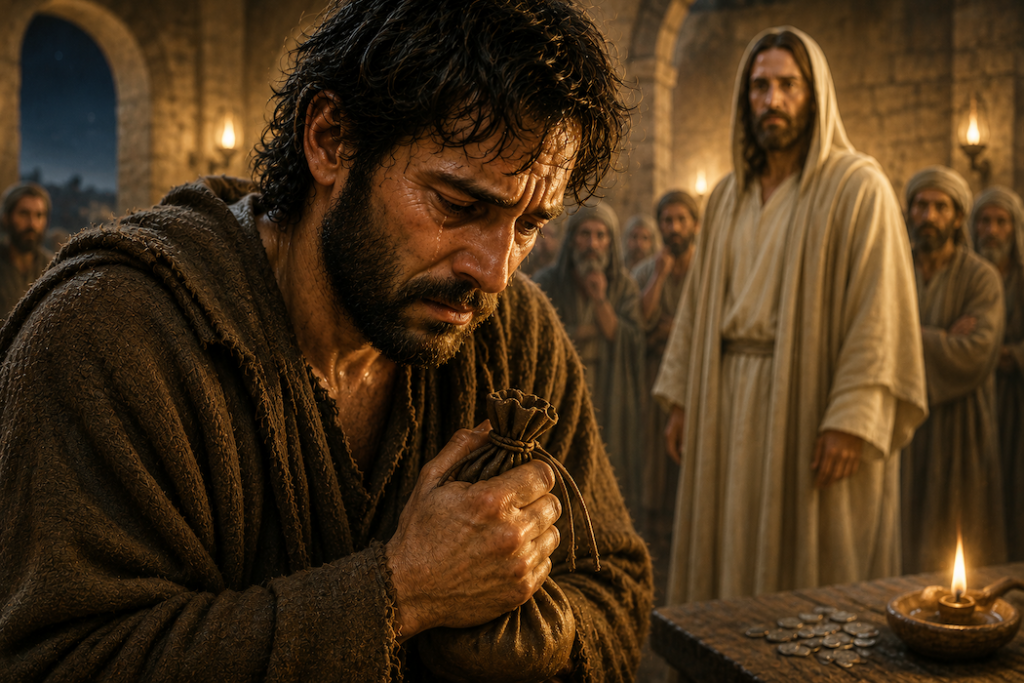
• Judas felt remorse. • He returned the thirty pieces of silver. • He confessed, “I have sinned, for I have betrayed innocent blood.” • Then he went away and hanged himself.
The difference may be found in two words:
Remorse and repentance.
Peter also failed Jesus spectacularly. He denied even knowing Him three times. Yet Peter ran back to Jesus and was restored.
Judas, however, seems to have concluded that his sin was beyond forgiveness and chose despair instead.
Could Jesus have forgiven Judas if he had come seeking mercy?
Based on everything we know about Christ’s character, many Christians would answer with a resounding yes.
Jesus forgave Peter, who denied Him. He prayed for those who crucified Him. He even promised paradise to the thief dying beside Him.
Jesus Himself said:
“Whoever comes to me I will never drive away.” John chapter 6 verse 37
The tragedy of Judas may not be that his sin was too great to forgive.
The tragedy may be that he never sought the forgiveness that was available.
A Warning About Despair
There is something deeply human about Judas’ story.
Imagine realising that your actions had helped send an innocent man, your teacher and friend, to His death. The weight of that guilt must have been unbearable.
Judas may simply have believed there was no way back. That possibility makes him less of a cartoon villain and more of a warning.
Peter sinned and ran toward Jesus.
Judas sinned and ran away from Him.
The Gospel’s uncomfortable claim is that no sin is beyond God’s mercy, but people can still refuse that mercy or despair of ever receiving it.
If we are honest, many of us find it easier to believe that God can forgive other people’s failures than our own.
Is God’s Forgiveness Automatic?
This brings us to another common misunderstanding.
Many people assume that because God is loving and forgiving, His forgiveness must be automatic. The Bible never teaches that.
Instead, it presents two truths:
• God is loving, merciful, and willing to forgive. • God is also holy and just, and forgiveness must be received, not presumed upon.
Scripture repeatedly connects forgiveness with repentance and faith.
“If we confess our sins, he is faithful and just and will forgive us our sins.” 1 John chapter 1 verse 9
Notice the word if.
“Repent therefore, and turn back, that your sins may be blotted out.” Acts chapter 3 verse 19
“Whoever believes in him is not condemned, but whoever does not believe stands condemned already.” John chapter 3 verse 18
Jesus welcomed sinners, but He also continually called people to repentance.
God’s forgiveness is freely offered, but it is not automatically applied.
Think of a royal pardon. The pardon may be genuine and available, but the prisoner must still accept it.
The God of the Bible is neither a God who forgives everyone automatically nor a God who is reluctant to forgive anyone. He is extraordinarily merciful, yet He takes sin seriously.
The father in the parable of the prodigal son ran to embrace his son before he had even finished his apology.
God is eager to forgive the repentant.
But His love is not a permission slip to remain unchanged.
As Paul wrote:
“Do you show contempt for the riches of his kindness… not realizing that God’s kindness is intended to lead you to repentance?” Romans chapter 2 verse 4
God’s love is an invitation to come home.
The tragedy of Judas may be that he never believed he could.

Leave a Reply